
Helping build a brighter future.
Green Gas Services, LLC
3939 S 500 W
Salt Lake City, UT 84123
United States of America



Photos of the ScavengeAir System Located at the Timpanogos Special Services District, UT.
That was the primary catalyst behind Green Gas Services’ (GGS) relatively recent foray into the world of desulfurization. Up until recently, GGS had been indirectly supporting efforts by biogas upgrading and conditioning systems (BUCS) to remove H2S in order to achieve pipeline grade gas quality. Many of those efforts fell short of the mark and GGS largely felt powerless to effect change. That is, until GGS was able to establish a partnership- and ultimately an exclusive North American distributor agreement- with UGN Umwelttechnik, a leader in gas desulfurization in Europe. The collaboration formed in 2024, brought together UGN’s proven media‑based hydrogen sulfide (H2S) removal technologies with Green Gas Services’ field expertise, system integration capabilities, and customer‑focused operational support.
With our newly formed partnership with UGN, and an extremely effective H2S removal media known as UgnCleanPellets®, GGS sought to better understand the root problems associated with H2S removal at BUCS. After a sustained effort to identify the problem through plant visits and conversations with industry experts, GGS learned that there were a few main issues at play: 1. A lack of alignment between a plant’s goals and a system’s capabilities; 2. An absence of information about contaminants in the gas and their concentrations; and 3. A lack of clarity about the sources of the contaminant gases and the best ways to remove them.
The easiest but also the most overlooked step should occur long before proposals are solicited, ensuring that the plant’s goals for H2S removal are clear and concise with consideration given to future growth, ease of maintenance, and the system’s ability to handle adjacent contaminants in the stream. Several questions need to be posed before a solicitation is released, such as:
These answers are essential for defining the removal system’s purpose and supporting long-term desulfurization performance.
Collecting data about the flow and the composition of the gas is crucial to establishing a baseline upon which all future success can be measured. While H2S is the most common gas contaminant, it is by no means the only harmful and odor causing contaminant in the raw gas stream- a point driven home during a recent visit to a local POTW at which we placed a pilot vessel. The purpose of the pilot was to generate baseline data about the flow, gas composition and effectiveness of our UgnCleanPellets®. After establishing that the system had completely removed the H2S from the incoming gas stream, gas composition analysis indicated that there were still harmful gases present in the stream in the form of volatile organic compounds (VOCs). While UgnCleanPellets® can remove water soluble VOCs, non-water-soluble VOCs require additional filtration. That is essential knowledge which must be incorporated into the system’s design to ensure the system reaches its full potential.
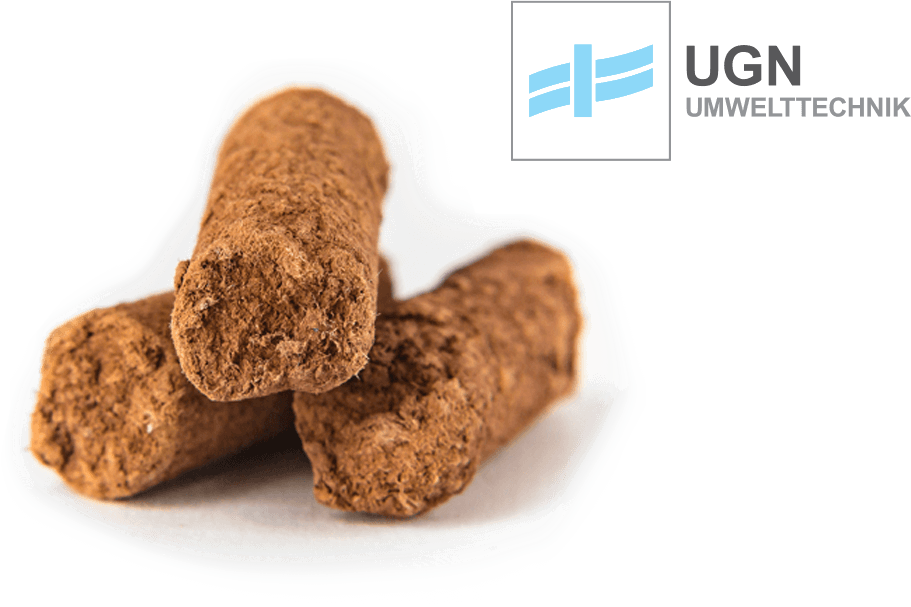
UgnCleanPellets®
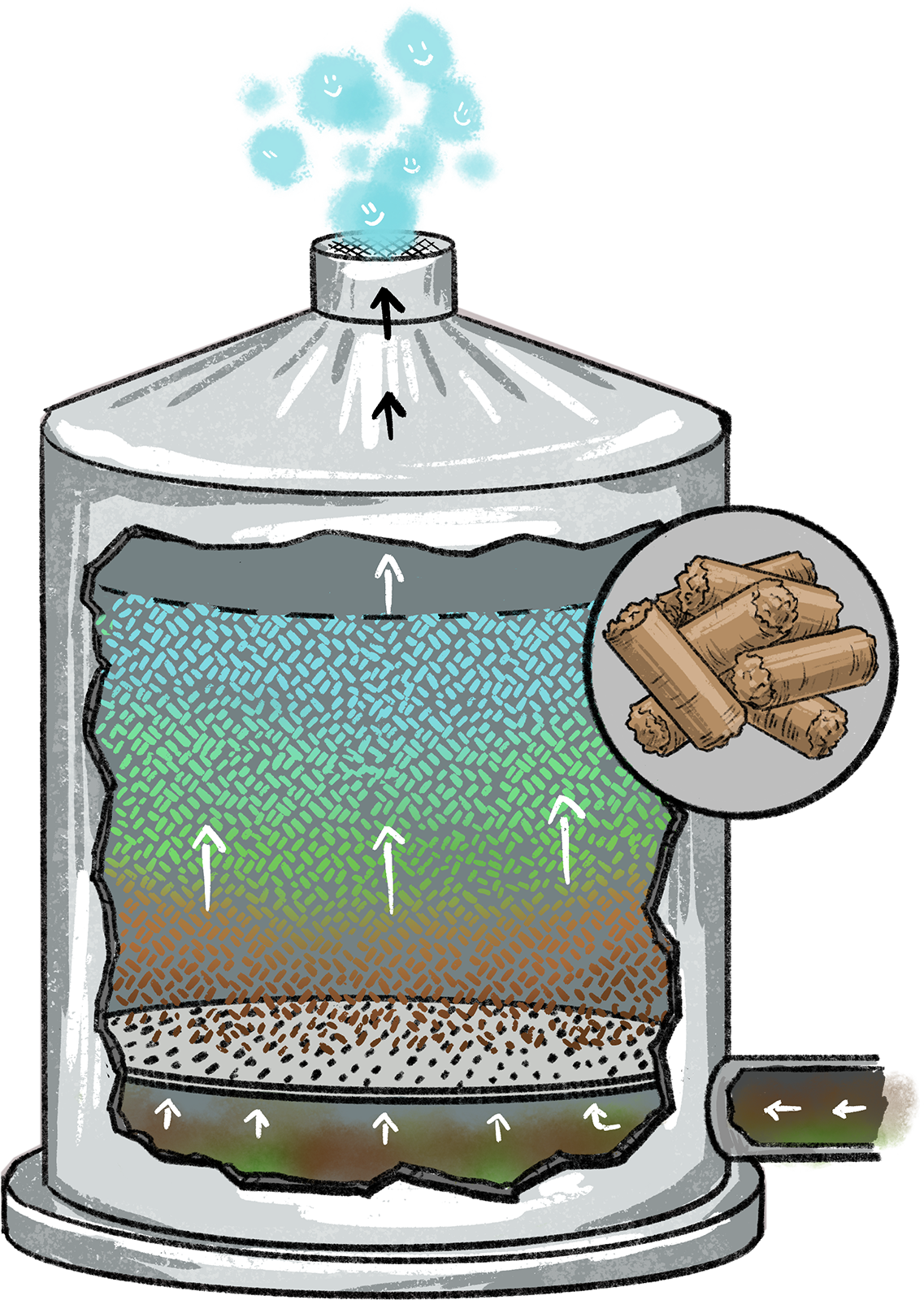
Green Gas Services’s ScavengeAir Vessel Illustration
H2S causes problems at numerous locations within a wastewater plant because it forms anywhere organic materials break down. Given that H2S impacts gas quality, operational reliability, worker safety, equipment longevity, and emits odors, plants must take a proactive approach to removing H2S at multiple sources. While many H2S removal systems take a centralized approach to removing the harmful gas, this can often result in corrosion and the release of gas as the contaminant gases work their way through the system toward the H2S removal system. Alternatively, GGS’s approach is focused on identifying the individual locations most likely to generate contaminant gases and then developing a decentralized plan for contaminant removal. This approach uses location-specific vessels tailored to the removal needs of each area and prevents H2S and other contaminants from being distributed around the plant, leaving corrosion and harmful and smelly odors in their wake. A decentralized approach also results in more minimal service interruption and more efficient media management- i.e. media change outs are spaced apart depending on the flow and H2S concentration at each location without having to take the entire removal system offline for a single changeout.
There is no question of the dangers H2S and other contaminant gases pose to health and safety, not to mention the corrosive impact on infrastructure. Too many plants adopt an approach to H2S removal based on limited information and knowledge, lacking the necessary foresight and motivation to ensure an informed design. However, plant management would greatly benefit from a design that accounts for the key decision-making factors: clear project goals, a thorough understanding of gas constituents, and the sources of contamination. Don’t hesitate to reach out to Green Gas Services to learn about their patent pending systems and UgnCleanPellets®. Click the links for more on Green Gas Services, ScavengeAir and UgnCleanPellets.
“What stood out about Green Gas Services was their commitment to our success from the very beginning. Before design work even started, they helped us pinpoint the sources and concentrations of H₂S and installed a pilot vessel at our facility to verify performance.”
Let’s chat about how we can help you achieve better performance, reliability, and efficiency
Helping build a brighter future.
Green Gas Services, LLC
3939 S 500 W
Salt Lake City, UT 84123
United States of America